A one-note drink isn't a finished drink
You've got a base and one hero ingredient. On its own that's one-dimensional. Great serves work in three dimensions at once: flavour (the hero plus opposite-side notes, balanced across six levers), texture (weight/body, mouthfeel and finish), and temperature (contrast, perception, and stated versatility).
Layering flavour
Keep one hero, but build a supporting cast so the drink isn't one note. The pro move: add auxiliary flavours from the opposite side of your primary profile — complexity, not clutter.
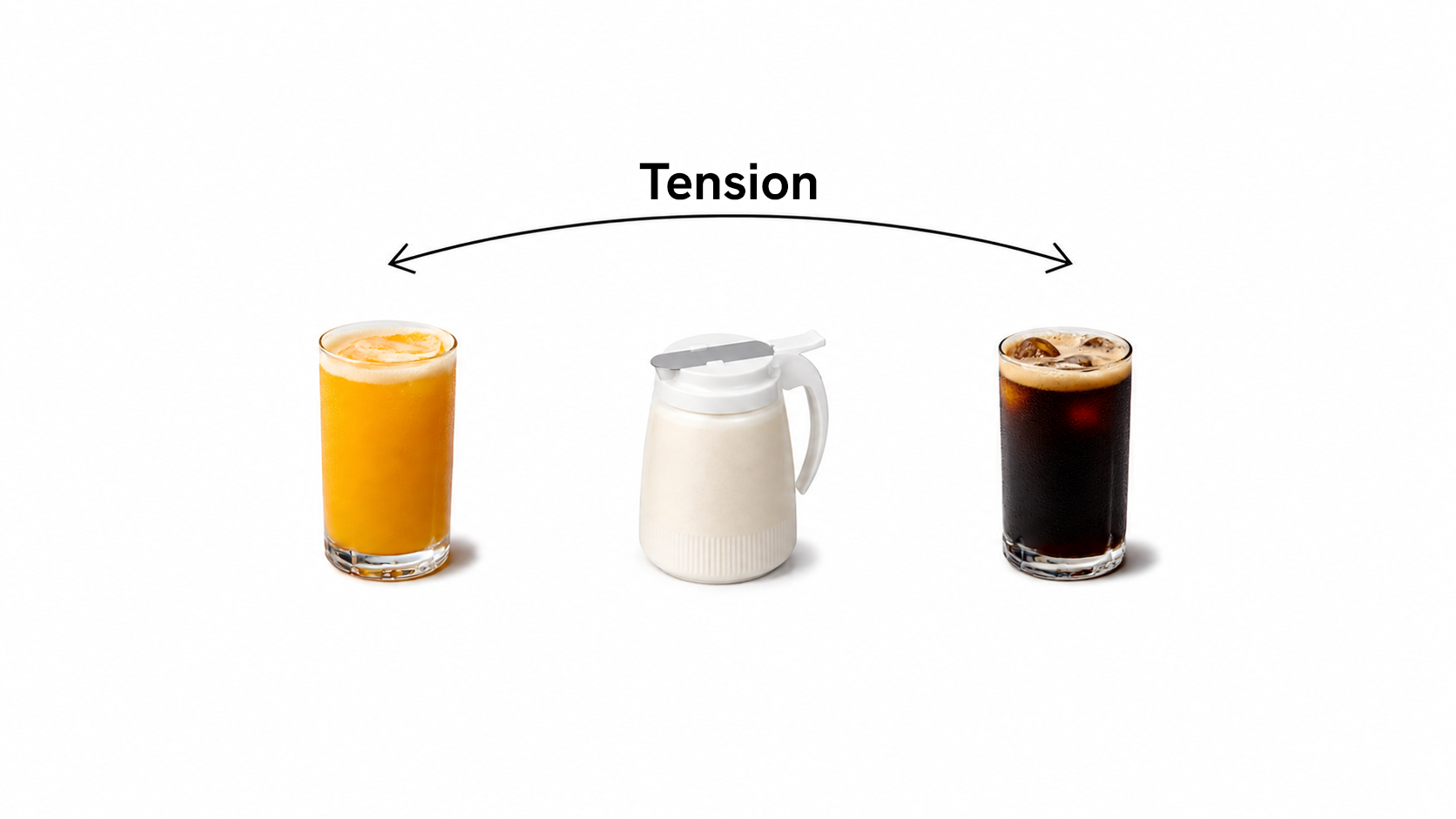
One hero, plus a note from the opposite side. Complexity, not clutter — every addition earns its place.
Four flavour layers
The six levers
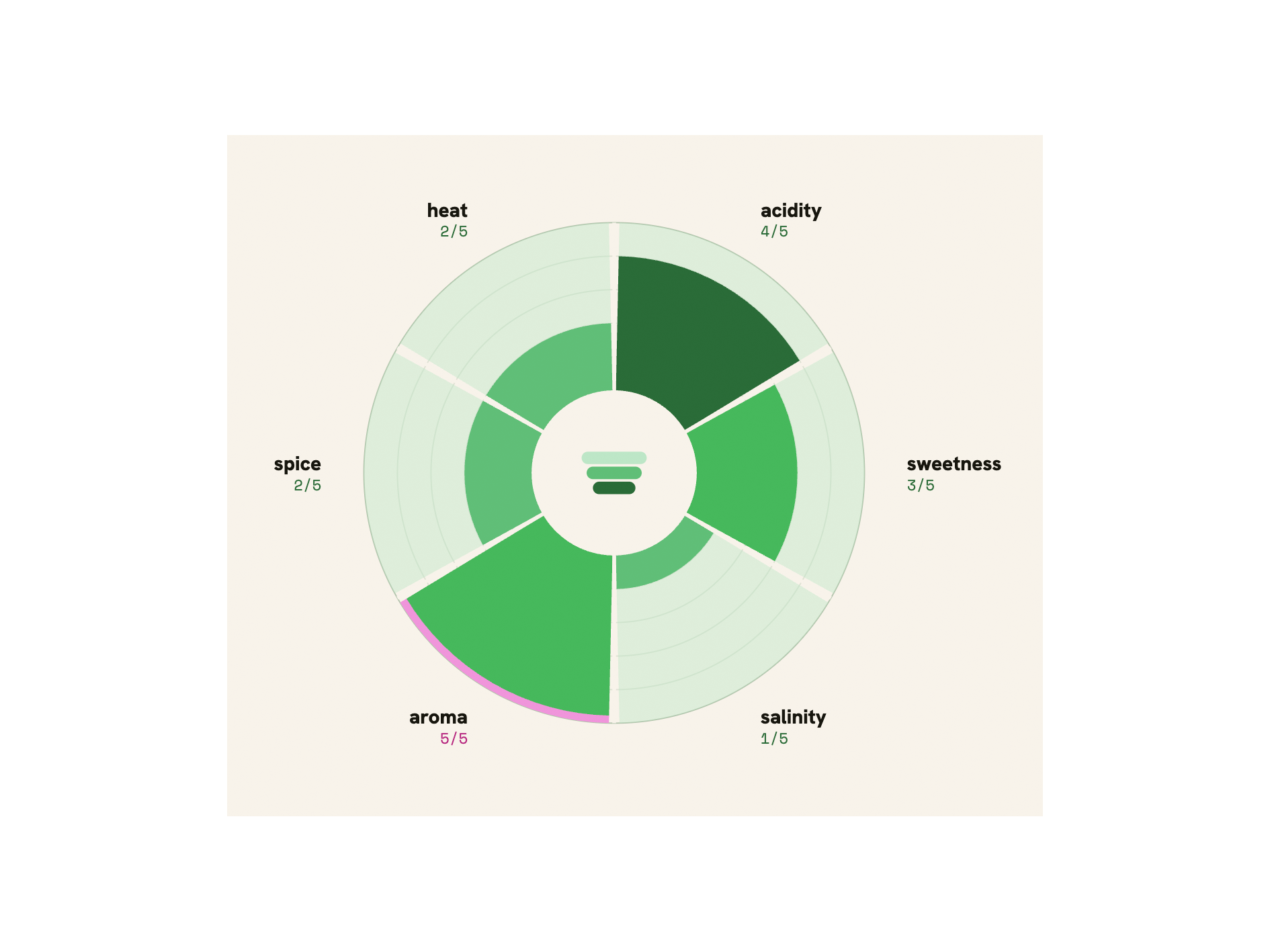
Balance across six levers, not four tastes. Salinity is the one most people forget.
Layering texture
Texture is where a drink earns "premium" and where the Look lives — visible layers are the photograph.
Texture is three things: how heavy it is, how it feels, and what it leaves behind. Finish is the one nobody plans.
Named texture techniques
Layering temperature
Temperature does three jobs: contrast, perception, and stated versatility.
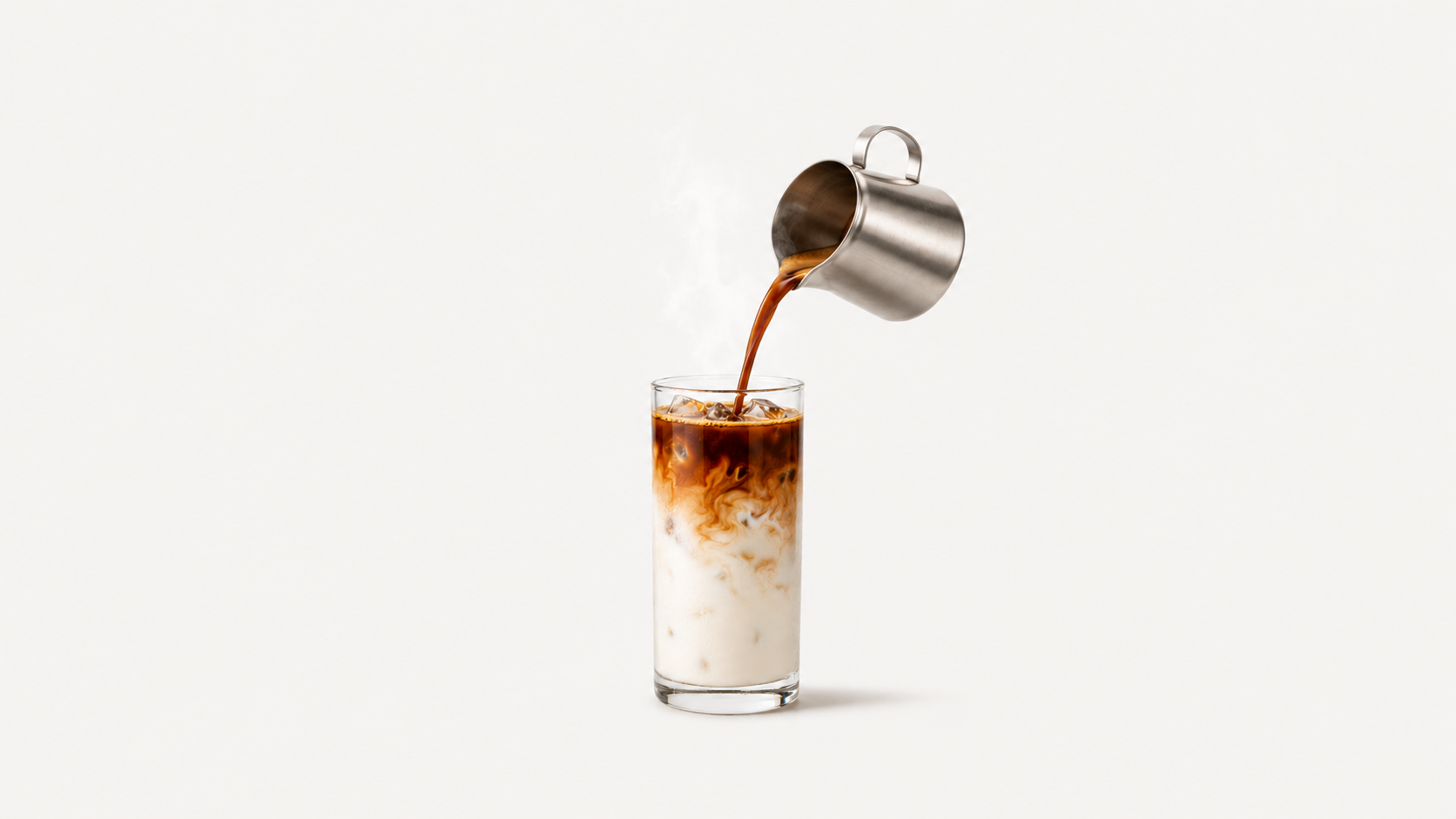
Warm lifts aroma, cold sharpens refreshment. Choose the temperature, and tell people how it's best drunk.
A three-dimensional serve
A finished drink should have: one hero; flavour built in layers with auxiliary notes from the opposite side, balanced across the six levers; a considered texture across weight, mouthfeel and finish; and a deliberate temperature with a clear "best enjoyed" call. Miss a dimension and it feels flat, even when the flavour is right.
Building in three dimensions
After the last lesson you've got a base and one hero ingredient. On its own, that's a flat, one-note drink. What turns it into something people remember and come back for is layering, building in three dimensions at once: flavour, texture and temperature. Most people only think about the first. The other two are what separate a memorable serve from a forgettable one. And one principle runs through all of it: every addition has to earn its place. Complexity doesn't mean more ingredients, it means the finished drink tastes like more than the sum of its parts.
Start with flavour, and keep the one-hero rule from last lesson. Layering doesn't mean piling in more heroes, it means giving your one hero depth and contrast. The professional move is to add auxiliary flavours from the opposite side of your primary profile. A heavy tropical drink doesn't improve by adding more tropical fruit — it washes out; it improves with something that cuts against it. Build in four layers: a base note from the base itself, the hero out front, a bridge like vanilla or coconut that connects them, and a top note you smell first. Then balance across six levers rather than the usual four tastes: acidity to lift a heavy drink, sweetness that pleases without cloying, salinity (a pinch of salt is the enhancer most people forget), aroma that changes the perceived flavour before the first sip, warming spice to round out brighter drinks, and actual heat like chilli used sparingly. In the Mont Blanc coffee that's espresso as the bitter base, chestnut cream as the hero, vanilla as the bridge, cocoa as the aromatic top note, and a pinch of salt to lift the chestnut.
Next comes texture, where a drink earns the word premium and where most of the Look lives, because visible layers are the photograph. Break the tactile into three parts. There's weight, or body, which is where the drink sits between tea-light and heavy cream. There's mouthfeel, what it actually feels like as you drink. And there's finish, the lingering effect after each sip, which is the part almost nobody plans and the part that decides whether someone wants the next mouthful. Reach for named techniques to hit a texture on purpose: sparkling from carbonation, fluffy from nitrogen or foams or egg white, smooth from a dairy base, syrupy from gomme or cordial, silky from clarification, or slushy from blending with ice. One texture all the way through feels cheap no matter how good it tastes — contrast is what makes it feel considered. The Mont Blanc coffee gives you smooth coffee, a fluffy piped cream and a fine cocoa top, with a lingering nutty-sweet finish.
Finally temperature, which does three things. It creates contrast — warm espresso over cold foam gives a little moment of surprise. It changes how the drink tastes, because warmth heightens aroma and sweetness so hot drinks read richer, while cold mutes sweetness and sharpens refreshment, which is why iced drinks usually need a touch more sweetness and always need re-tasting cold. And it's a decision you should state: work out whether the drink is best hot, cold or both, and tell people. Iced, layered serves show colour and temperature gradients too, which is why they photograph best.
Put it together and a finished drink has one hero, flavour built in balanced layers with a note from the opposite side, a texture considered across weight, mouthfeel and finish, and a temperature you chose on purpose with a clear best-enjoyed call. Miss any one dimension and it falls flat, even when the flavour is right. Next lesson, we turn this into a repeatable recipe you can make the same way every time.
What to remember
Test what you've learned
1. What three dimensions make a drink feel complete?
2. Where should auxiliary flavours come from, and why?
3. What are the six balance levers?
4. What are the three parts of texture?
5. What is "finish," and why does it matter?
6. What's the guiding principle for adding any ingredient?
Optional reflection
Take your drink from Lesson 1. Name its four flavour layers and the opposite-side note, which of the six levers it uses, its weight/mouthfeel/finish, and how it's best enjoyed.