Two things sell the drink
A great drink that's badly named and badly shot just sits there. Two things sell it, and they have to tell the same story — same hero, same promise.
Writing the copy
The name
Short, sayable, searchable. Descriptive or evocative beats generic — "Mont Blanc Coffee" works far harder than "Orange Coffee." Menu research found descriptive labels can lift sales by roughly a quarter and raise how much people enjoy the drink, before the recipe changes at all. The name is free marketing; give it real thought.
The description
One line. Follow a simple shape:
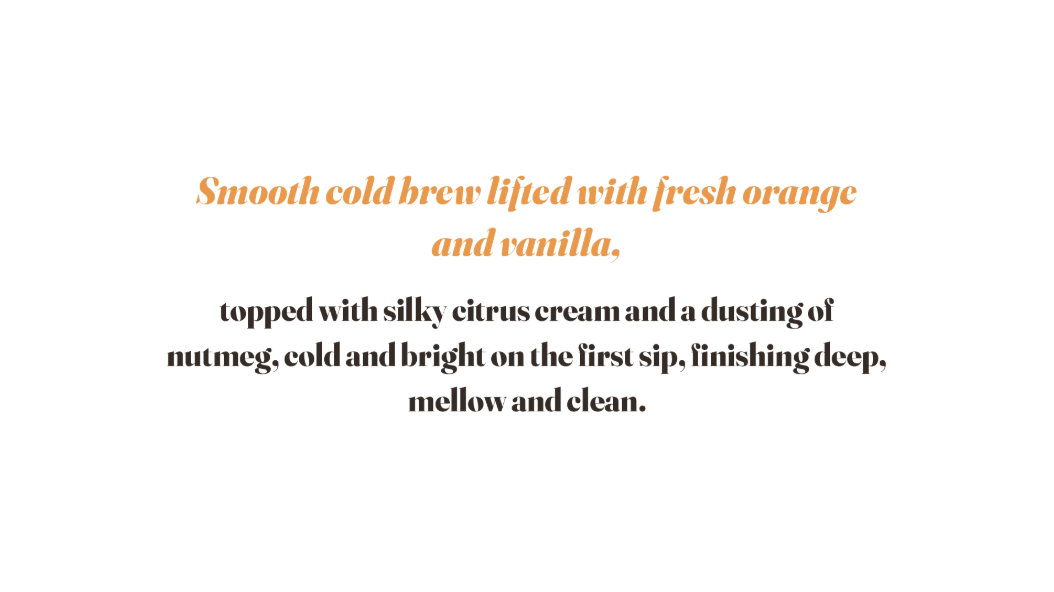
one line: hero first, specific and sensory, ending on the garnish.
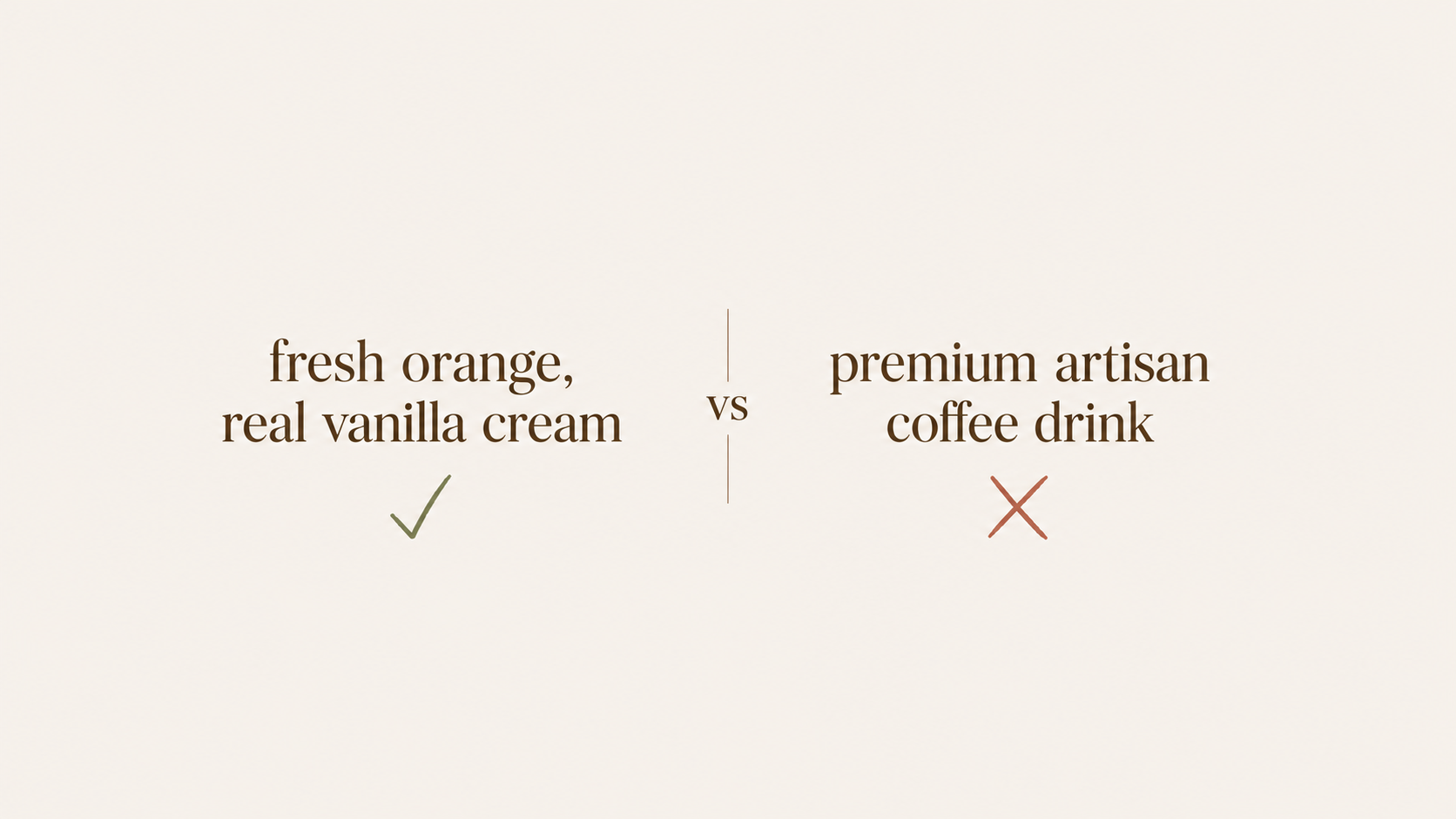
specific sells. "premium" and "artisan" say nothing. name what's actually in it.
Mont Blanc Coffee — chilled espresso and fresh orange, folded through silky vanilla cream, finished with orange zest.
social caption: "orange, coffee, vanilla cream. the Mont Blanc Coffee."
Taking the shot
The hero shot does double duty: it sells on the menu and it's your top-of-funnel on social. Get one great frame and one short clip.
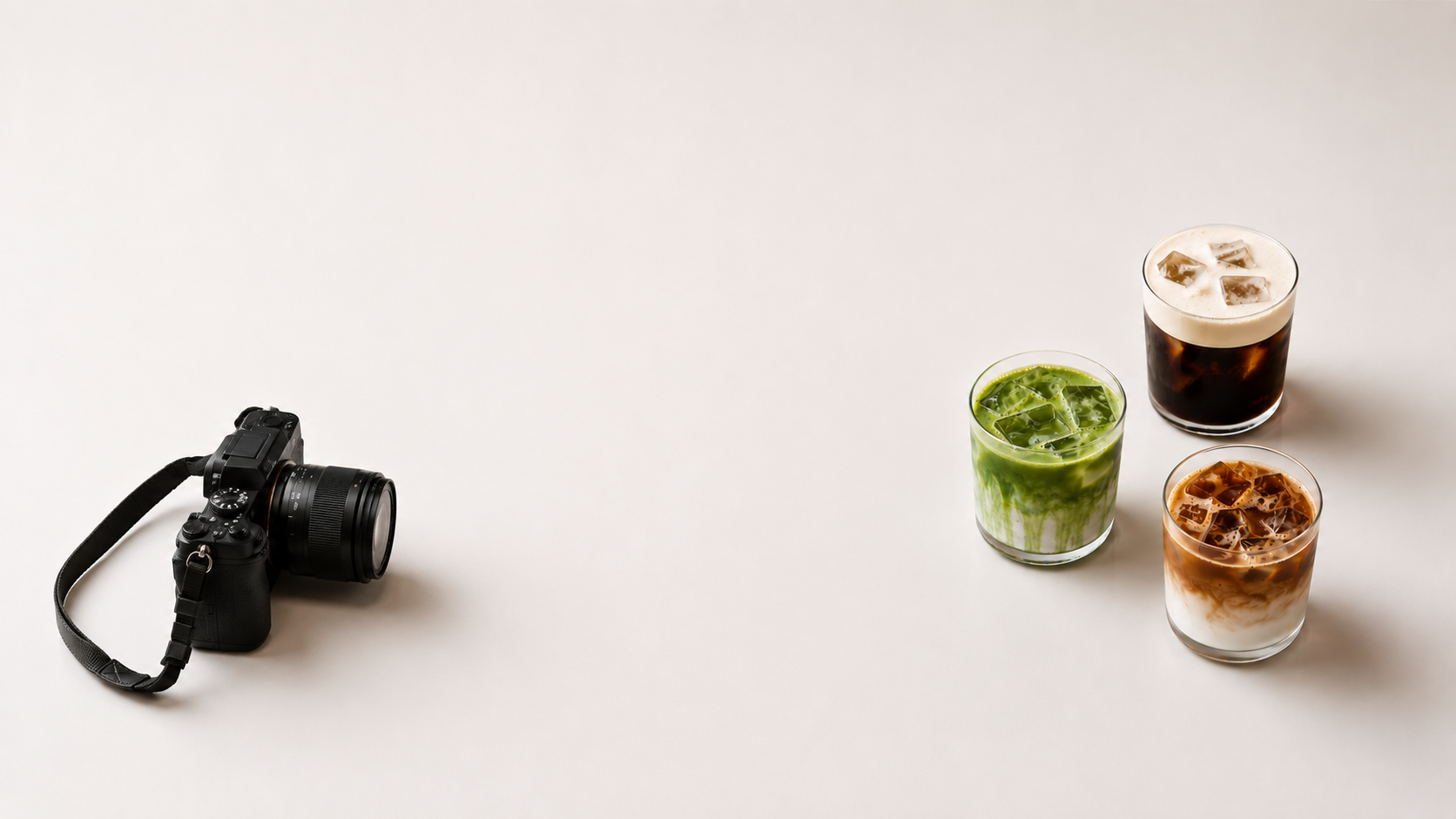
soft side light, clean background, drink off-centre. one repeatable setup.
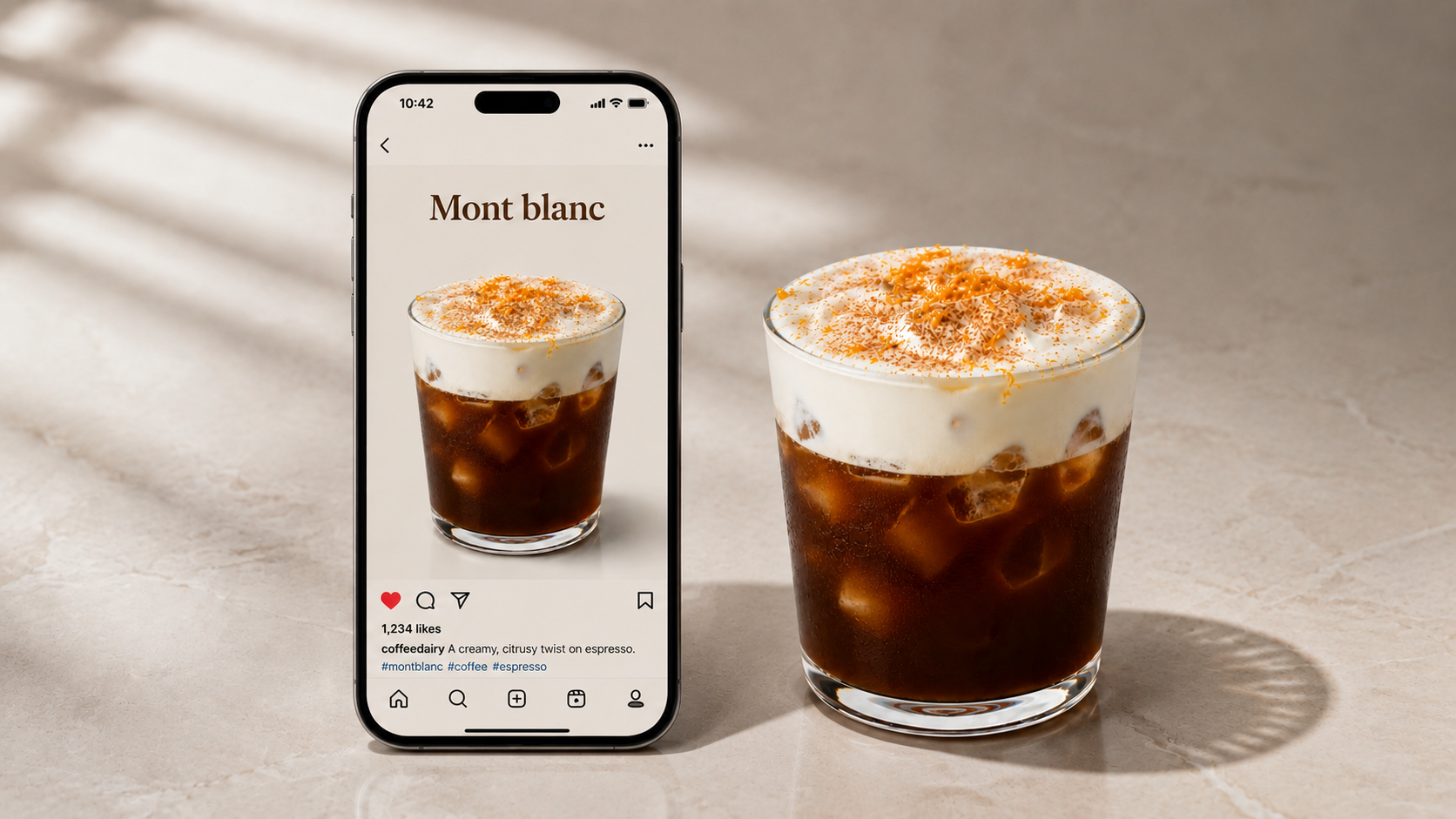
the thumbnail test: shrink it to phone-feed size. if it doesn't read instantly, push the colour, layers or light before you post.
Make them match
The copy and the shot are one unit. Write the line and take the shot together, from the same finished drink, so what people read and what they see tell the same story. That match is what converts a scroll into an order.
the words promise it, the shot delivers it. write and shoot from the same drink.
Selling with words and a picture
The drink is built, costed and priced. None of that sells it on its own. Two things do the selling: the words and the shot. The words are the name and the one-line description. The shot is the hero image or clip. And the single most important rule is that they have to tell the same story, same hero, same promise, because when the copy says silky vanilla cream and the picture shows something else, people feel misled and scroll on.
Start with the words. The name should be short, sayable and searchable, and descriptive or evocative always beats generic, because "Mont Blanc Coffee" works far harder than "Orange Coffee." This isn't a hunch — menu research found that descriptive labels can lift sales by around a quarter and raise how much people say they enjoyed the item, all before the recipe changes at all, so the name is genuinely free marketing and deserves real thought. The description should be a single line built to a simple shape: lead with the hero ingredient, add the supporting notes, use a sensory word or two, and end on the finish or garnish. Be specific and true, because "fresh orange" and "real vanilla" signal quality while "premium" and "artisan" signal nothing, and cut any word that doesn't earn its place — exactly the discipline you used on garnish and auxiliary flavours. For the Mont Blanc coffee that gives you: chilled espresso and fresh orange, folded through silky vanilla cream, finished with orange zest.
Then take the shot, which does double duty as your menu image and your top-of-funnel on social. Light it with soft natural light from the side or slightly behind — this gives depth and shows the layers — and avoid flat overhead flash because it kills texture and makes a drink look cheap. Keep the background clean and on-brand so nothing competes with the drink. Compose with the drink slightly off-centre to leave space for text, shooting layered drinks at eye level or 45° so the layers read and flat drinks from straight above. Add freshness cues — condensation on a cold glass or the zest caught mid-grate — because they say the drink was made just now. For social, a few seconds of the build, the cream floated or the zest grated, beats any still for stopping the scroll — process footage is the most shareable thing you can make. Shoot everything in one repeatable setup so your whole menu and feed look like a single brand. Before anything goes out, run the thumbnail test: shrink it to phone size, and if it doesn't read instantly, push the colour, the layers or the light.
Finally, the copy and the shot are one unit, not two tasks. The words promise fresh orange and vanilla cream, and the frame has to show the zest and the cream layer. Write the description and take the photograph together from the same finished drink. That match, between what people read and what they see, is what turns a scroll into an order. Next lesson, we take this drink to the feed and plan the launch.
What to remember
Test what you've learned
1. What two things actually sell a drink once it's built?
2. What shape should the one-line description follow?
3. Why choose "fresh orange, real vanilla" over "premium artisan drink"?
4. What lighting makes a drink look its best?
5. Why must the copy and the shot match?
Optional reflection
Write a one-line description for your drink using the hero-first shape, then describe the single hero shot you'd take. Do the words and the picture tell the same story?