
Putting it on the menu isn't the finish line
Every viral serve follows a curve: spike, settle, fade. Read it alongside the real margin from Module 3 and it tells you exactly what to do next.
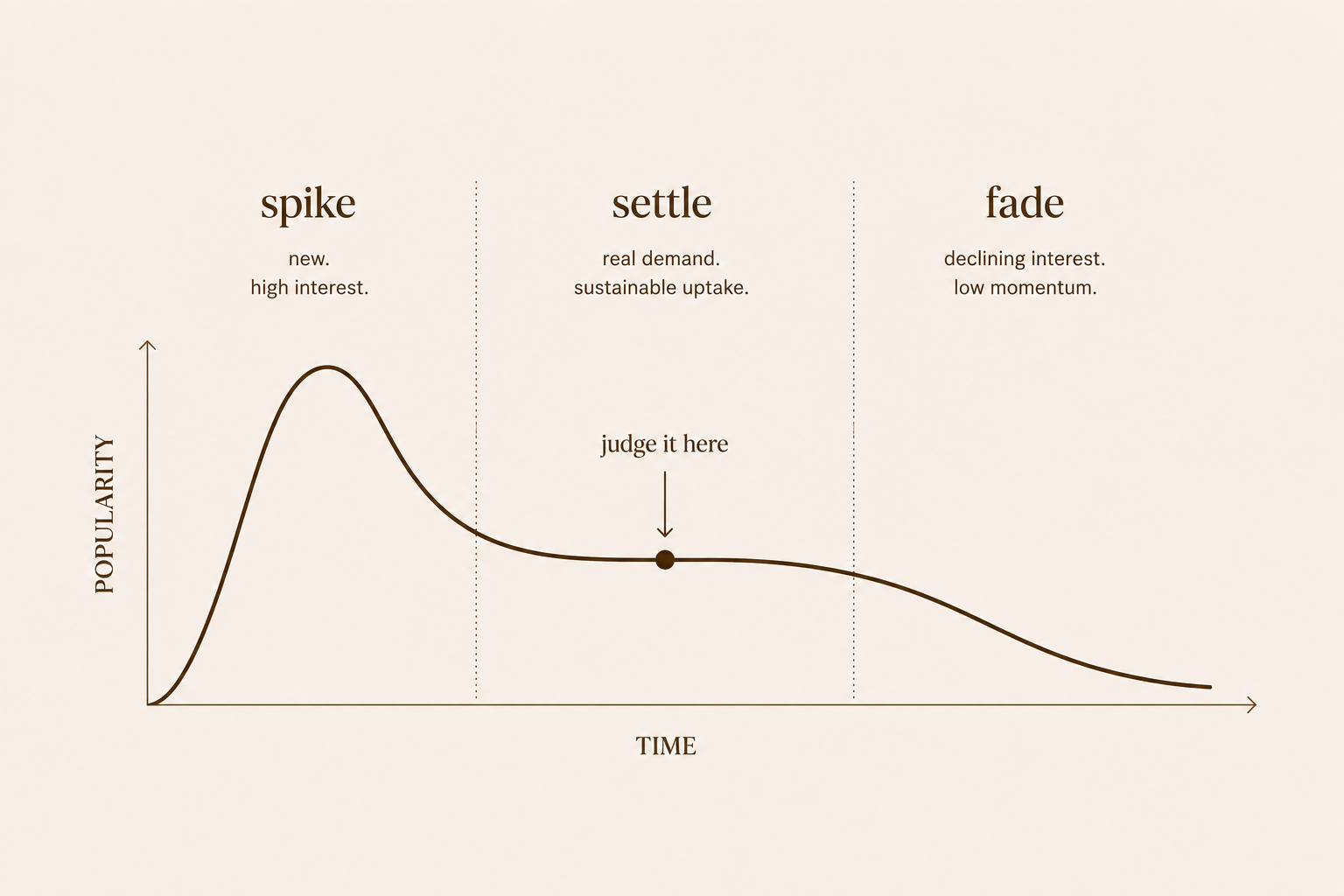
the launch spike is not the baseline. judge the drink on where it settles.
The numbers worth watching
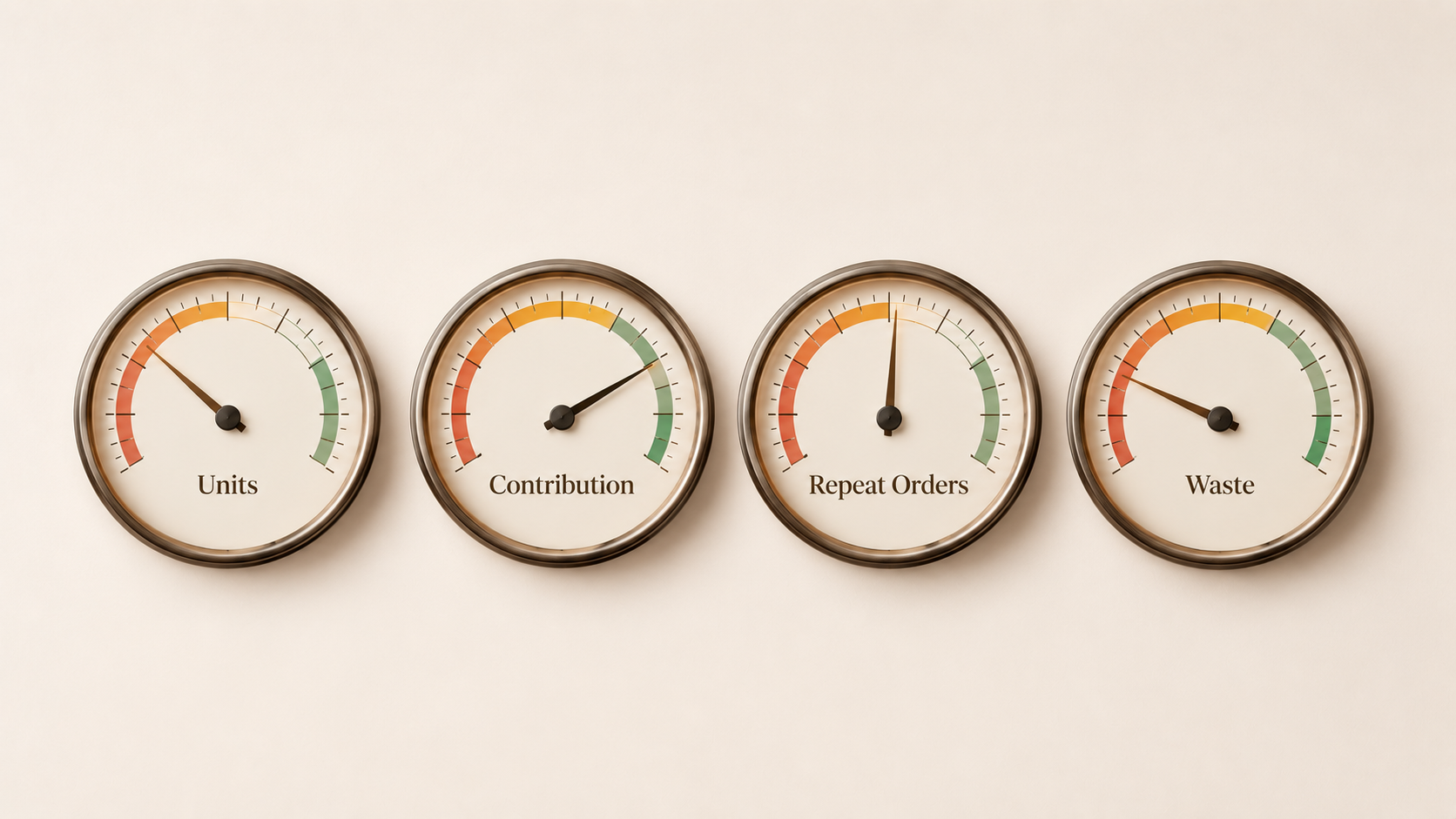
You don't need a dashboard. Four numbers.
Reading them properly
The launch spike is not the baseline. Week one is inflated by novelty and your own promotion. Judge the drink on where it settles after three or four weeks, not on its opening.
Keep, tweak, or retire
Put two things together — sales trend and margin health — and the decision falls out.
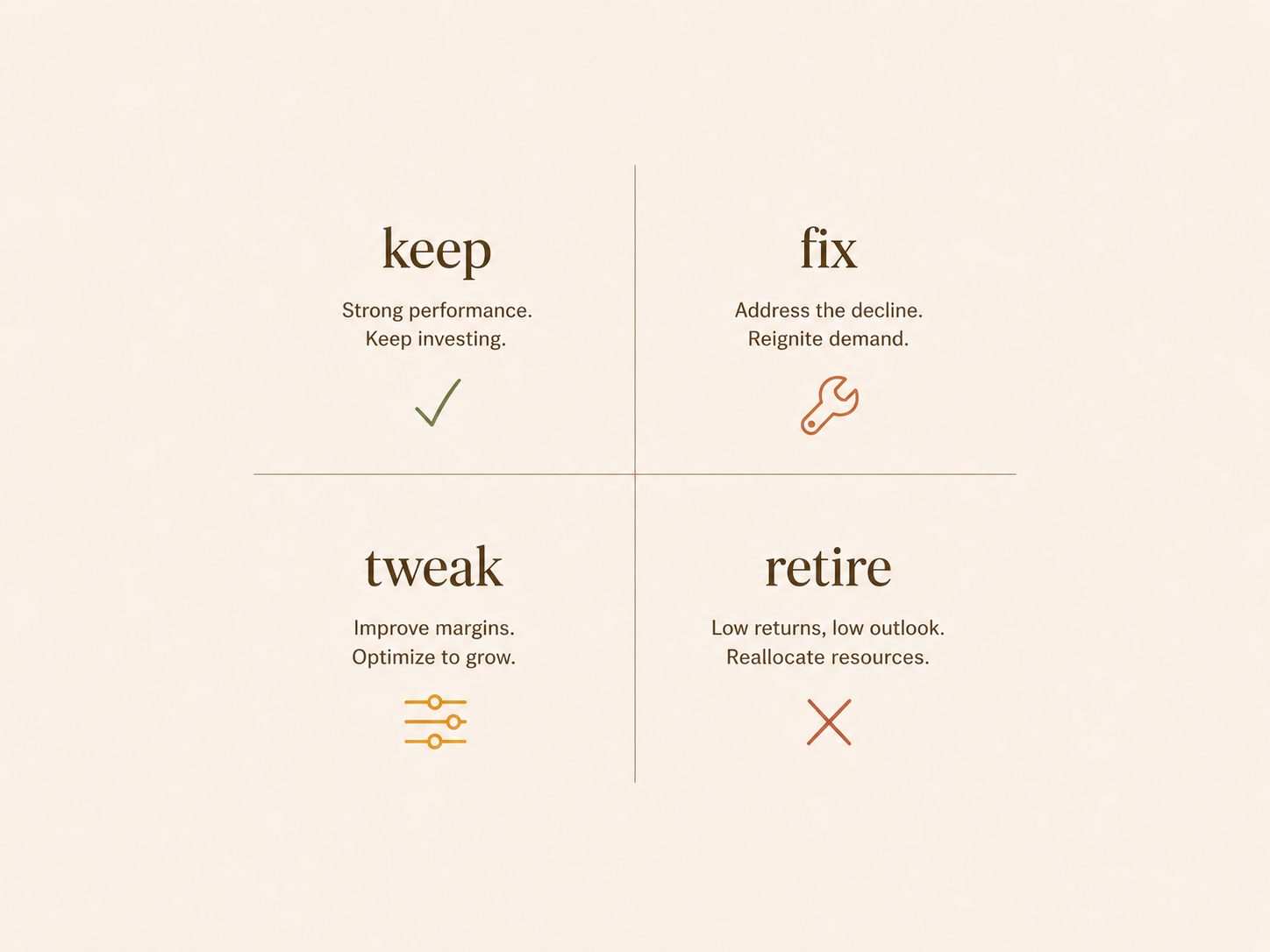
steady sales, good contribution, reorders. make it a permanent line or push it harder.
selling well but barely profitable means the price or cost is wrong, not the drink. back to costing and pricing.
good margin but sliding, refresh it: a new garnish, a reshoot, a seasonal spin, a small reprice, to re-trigger interest.
falling sales and thin margin. it's occupying a menu slot, prep time and fridge space the next drink could use. let it go.
Retiring well
Retiring isn't binning it. Two smart exits.
The Mont Blanc coffee
Illustrative. Launch week: 120 units. Settles by week four to ~70 a week. Cash margin ~£3.42 net per drink (Module 3).
The point: you can only make either call because you costed it to the penny. Without the margin, "it's selling" tells you nothing about whether it's worth keeping.
Running the cycle on purpose
Putting the drink on the menu isn't the finish line, it's the start of the last skill: reading how it actually performs and deciding what to do about it. Every viral serve follows a curve — a spike, a settling, and eventually a fade — and that curve is Module 1's trend line showing up in your own till. Read it alongside the real margin you worked out in Module 3, and it tells you exactly what to do next.
You don't need a dashboard to do this, just four numbers. The first is units per week, the plain trend of how many you're selling over time. The second, and the one that matters most, is contribution: the cash margin per drink multiplied by the units sold, which is the actual money the drink puts in your pocket rather than the headline sales figure. The third is repeat orders, because a drink people come back for is real while one that only gets curiosity buys is already fading. The fourth is waste, meaning the spoilage of any ingredient only this drink uses, because as sales slow, unique perishables start going in the bin and quietly eat whatever margin is left.
The single most important thing when reading those numbers is to ignore the launch spike. Week one is inflated by novelty and by your own promotion, so it tells you almost nothing. Judge the drink on where it settles after three or four weeks. Once settled, the readings are easy to interpret: steady units at a healthy margin with people reordering is a genuine winner; units sliding week on week means the novelty is spent; good volume but thin contribution is a pricing or cost problem rather than a demand problem, so you go back to Module 3; and rising waste means the drink is costing you even on the weeks it sells.
Then you decide — and the decision falls out of two things put together: the sales trend and the margin health. Steady or rising sales at a healthy margin means keep it. Selling well but barely profitable means fix it, reprice or recost. A good margin but sliding sales means tweak it — a new garnish, a reshoot, a seasonal spin or a small reprice to re-trigger interest. And falling sales together with a thin margin means retire it. The reason to retire on time is the menu-slot idea: every item on your menu holds a slot with an opportunity cost in prep time, fridge space and customer attention, so a fading drink isn't neutral, it's actively blocking the next viral serve.
And retiring well is its own move, not just binning the recipe. You can make the drink seasonal — pulling it at its peak and bringing it back later, because scarcity builds anticipation and the return becomes its own event, which is exactly how the Pumpkin Spice Latte works. Or you replace it with the next rising flavour, looping straight back to Module 1's signals and building the next drink while this one's audience is still warm. For the Mont Blanc coffee, settling at around seventy a week at £3.42 each is roughly £239 a week and £12,400 a year from a single drink — a clear keep. But if it slid to twenty-five a week with cream and oranges spoiling mid-week, that's a clean retire or a seasonal comeback. Either way, you can only make the call because you costed it to the penny — without the margin, "it's selling" tells you nothing about whether it's worth keeping.
That's the whole arc. You learned what makes a drink go viral, built one deliberately, made it look the part, costed it to the penny, priced it to pay and feel right, sold it with the right words and the right shot, and now you know how to read its sales and retire it well. Learn it, create it, cost it, sell it, measure it.
The last idea is the most important: this is a loop, not a one-off. A viral drink is meant to have a lifecycle, so the moment one starts to fade you already know the move — back to the flavour signals, and build the next. That's the difference between a cafe that got lucky once and a cafe that can do it again, on purpose, forever. Now go build your first one.
Learn it, create it, cost it, sell it, measure it.
That's the whole arc. You learned what makes a drink go viral, built one deliberately, made it look the part, costed it to the penny, priced it to pay and feel right, sold it with the right words and the right shot, and now you know how to read its sales and retire it well.
This is a loop, not a one-off. A viral drink is meant to have a lifecycle, so the moment one starts to fade you already know the move: back to the flavour signals, and build the next. That's the difference between a café that got lucky once and a café that can do it again, on purpose, forever. Now go build your first one.
What to remember
Test what you've learned
1. Why should you ignore the launch-week sales figure?
2. Which number tells you the actual money a drink makes?
3. A drink has good volume but thin or negative contribution. What is it?
4. When declining sales meet a thin margin, what's the call?
5. What does "retiring well" mean?
Optional reflection
For a drink you sell, name its settled weekly units, its contribution, and where it sits on the keep/fix/tweak/retire grid. What's your next move?