
Two bars to clear
Every price has to do two things at once. Miss either one and the drink either doesn't pay or doesn't sell.
The GP formula
One formula gives you the floor. Everything below it is a decision to trade at a loss.
"one bracket is where most pricing goes wrong."
The markup-vs-margin trap
What shapes the ceiling
The maths sets the floor. These four things determine how much headroom you have above it.
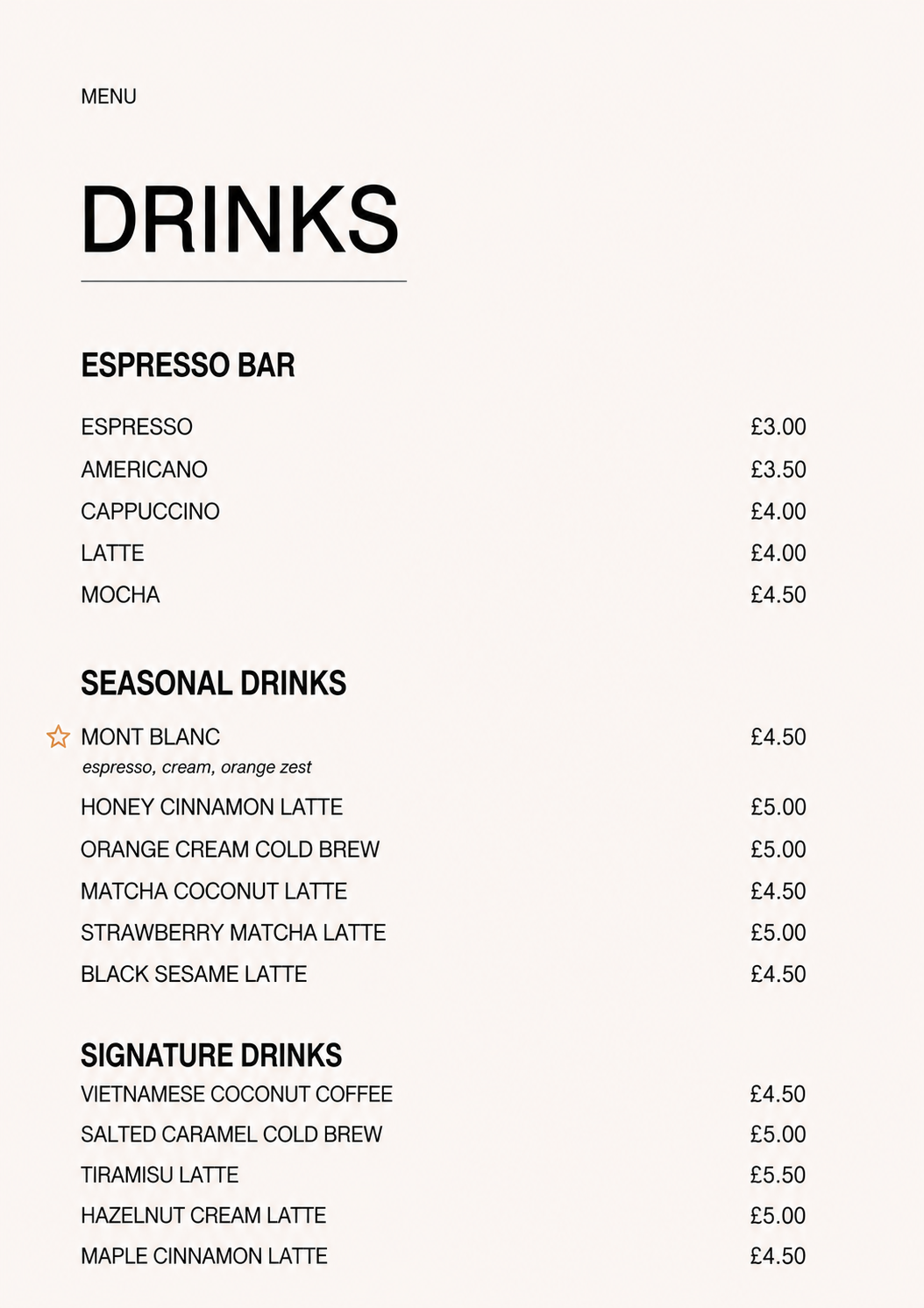
When the numbers don't line up
If the floor is above the ceiling — the formula demands a price higher than the market will pay — there's a specific order of operations.
The Mont Blanc coffee, priced
Formula floor at £4.64. Three candidate prices tested against both bars.
at £5.50, both bars are cleared: the margin pays at around 75% GP, and the price reads as considered for a specialist, eye-catching serve. that's the whole skill repeated on every drink on your menu.
Turning cost into a price that works
You have a cost. Now you need a price. They're not the same number, and the relationship between them is where most cafés quietly lose money, not by being careless with ingredients but by setting prices without a method. There are exactly two things a price has to do: clear the margin you need to trade profitably, and feel right for what the drink is and who's ordering it. Both bars matter. Clear one and miss the other and you're either selling unprofitably or not selling at all.
The GP formula is the only right way to price from cost. The formula is: selling price = cost price ÷ (1 − target GP%). That one bracket is where most people go wrong. Cost times three gives you a 66% markup, not a 66% GP. Markup and margin are completely different numbers, and if you confuse them, your target GP will always be lower than you think. For the Mont Blanc coffee at £1.16 cost and a 75% GP target, the formula gives a minimum price of £4.64. That's the floor, not the price — it's the point below which the drink doesn't pay.
The ceiling is what the market will actually pay, and psychology shapes it more than arithmetic does. The format matters, because £4.99 reads as discounted and £5.50 reads as deliberate. Anchoring matters, because your price only has to feel right next to the other drinks on your menu, not against every café in the city. And the viral premium matters, because a drink someone's seen on their feed arrives with an expectation already built in. People expect to pay more for something they recognise as special, and that expectation is real margin.
When the two bars don't line up, there's a clear order of operations. First, cut the cost, not the margin — a cheaper cup, a tighter portion, a supplier switch can close the gap without touching the GP. Second, reposition the drink — a different glass, a different size, a different framing changes what the price is for. Only then, as the third resort, accept a lower GP as a deliberate footfall or social play. The one thing you never do is pick a number that sounds about right and assume the margin follows. It doesn't.
For the Mont Blanc coffee, £5.50 clears both bars: the maths pays at around 75% GP, and the price reads as considered for a specialist, eye-catching serve. That's the whole skill repeated on every drink: know the floor the formula gives you, read the ceiling your market and menu set, and find the price that sits comfortably between them. Next lesson, we look at what happens when you do this across every drink at once, and where the real margin opportunity lives on a full menu.
What to remember
Test what you've learned
1. What are the two bars a selling price must clear?
2. What is the correct GP formula for setting a price from cost?
3. A drink costs £1.16. At a target GP of 75%, what is the minimum selling price?
4. Which psychology tactic means a £5.50 drink can feel reasonable even if it's near the top of your range?
5. If the formula price is higher than the market will bear, what should you try first?
Optional reflection
Take a drink you currently sell and run both bars: the formula floor and your read of the market ceiling. Is the price you're charging sitting comfortably between them, or is it a guess?