Pack price → portion cost
You buy ingredients by the pack, litre, or kilo. You use them by the splash, the shot, the pump. You can't know what a drink costs until you break every ingredient down to the exact amount used in one portion. That's the whole skill.
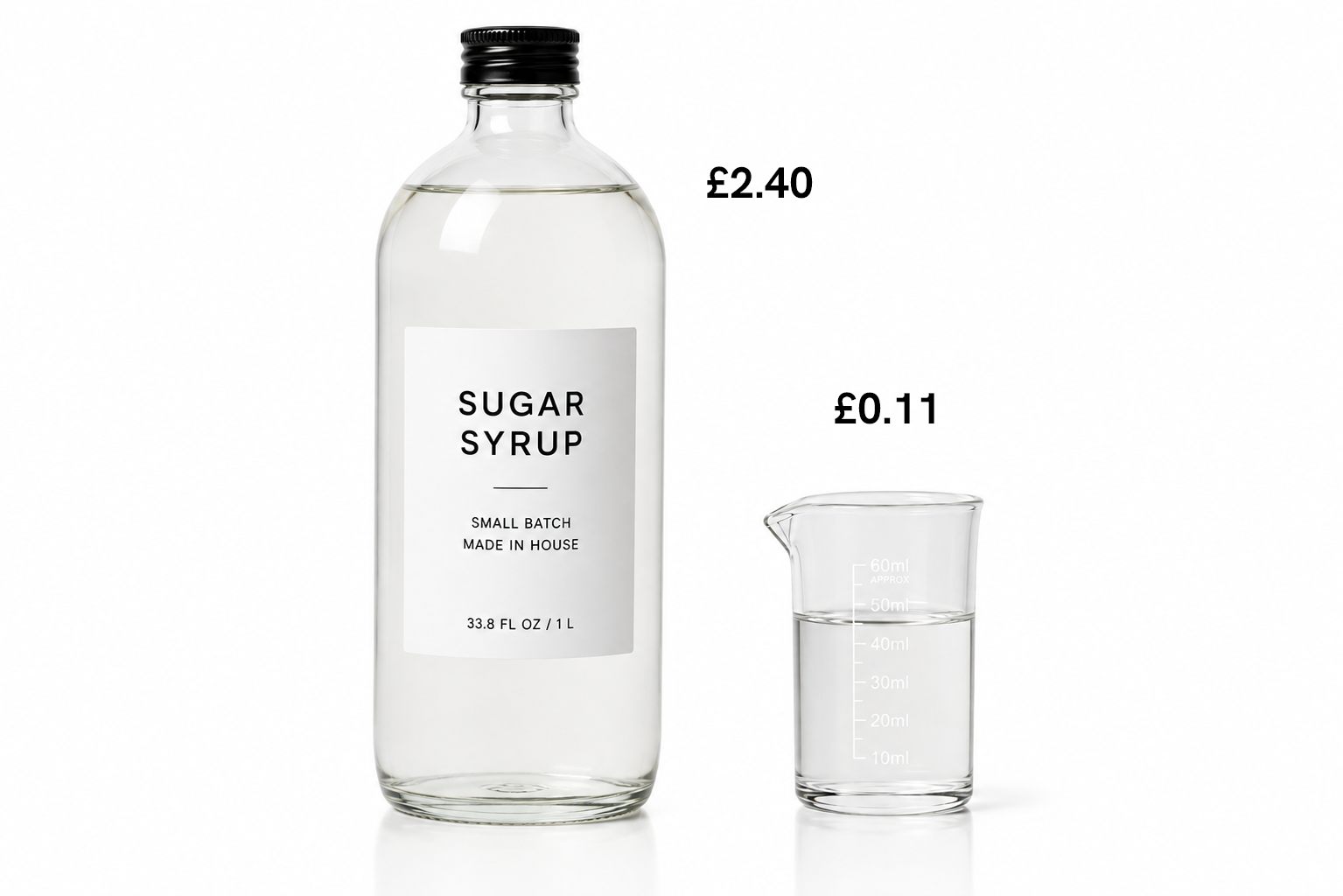
"you buy by the litre. you use by the splash. cost the splash."
Pack to portion, four steps
For every ingredient, do the same four steps.
The Mont Blanc coffee, to the penny
All prices below are illustrative UK figures (GBP) to show the method. Plug in your own supplier prices when you teach it, or let Silvan do the maths for you.
The invisible ingredients
The lines people forget, and every one costs money.
Why "to the penny" matters
A 10p costing error on one drink is nothing. The same error across 150 drinks a day is £15 a day, over £5,000 a year, on one menu item. Cost carelessly and you can run a "successful" viral drink at a loss without ever noticing. Costing to the penny per portion is what turns a guess into a decision — it's the number every price, margin and menu call in the rest of this module is built on.
What it actually costs to make
You've built the drink and made it look the part. Now comes the question every viral video skips: what does it actually cost to make? Until you can answer that to the penny, you're guessing, and a drink that looks premium can quietly lose you money on every serve. The skill is simple to describe and easy to get wrong, so we'll do it properly once.
The reason costing trips people up is a mismatch of units. You buy ingredients by the pack, the litre, or the kilo, but you use them by the splash, the shot and the pump. So the job is to break every ingredient down to the exact amount that goes into one portion. The method is the same four steps every time. First, divide the pack price by the pack size to get a unit cost, the cost per millilitre, per gram, or per each. Second, convert your recipe amount into that same unit, because a tablespoon is 15 millilitres, a teaspoon is 5, an ounce is about 30, and half a cup is about 120. Third, multiply the unit cost by the amount you actually use to get that ingredient's cost per portion. Fourth, add every line together, including the ones that aren't flavour, for your total cost per serve.
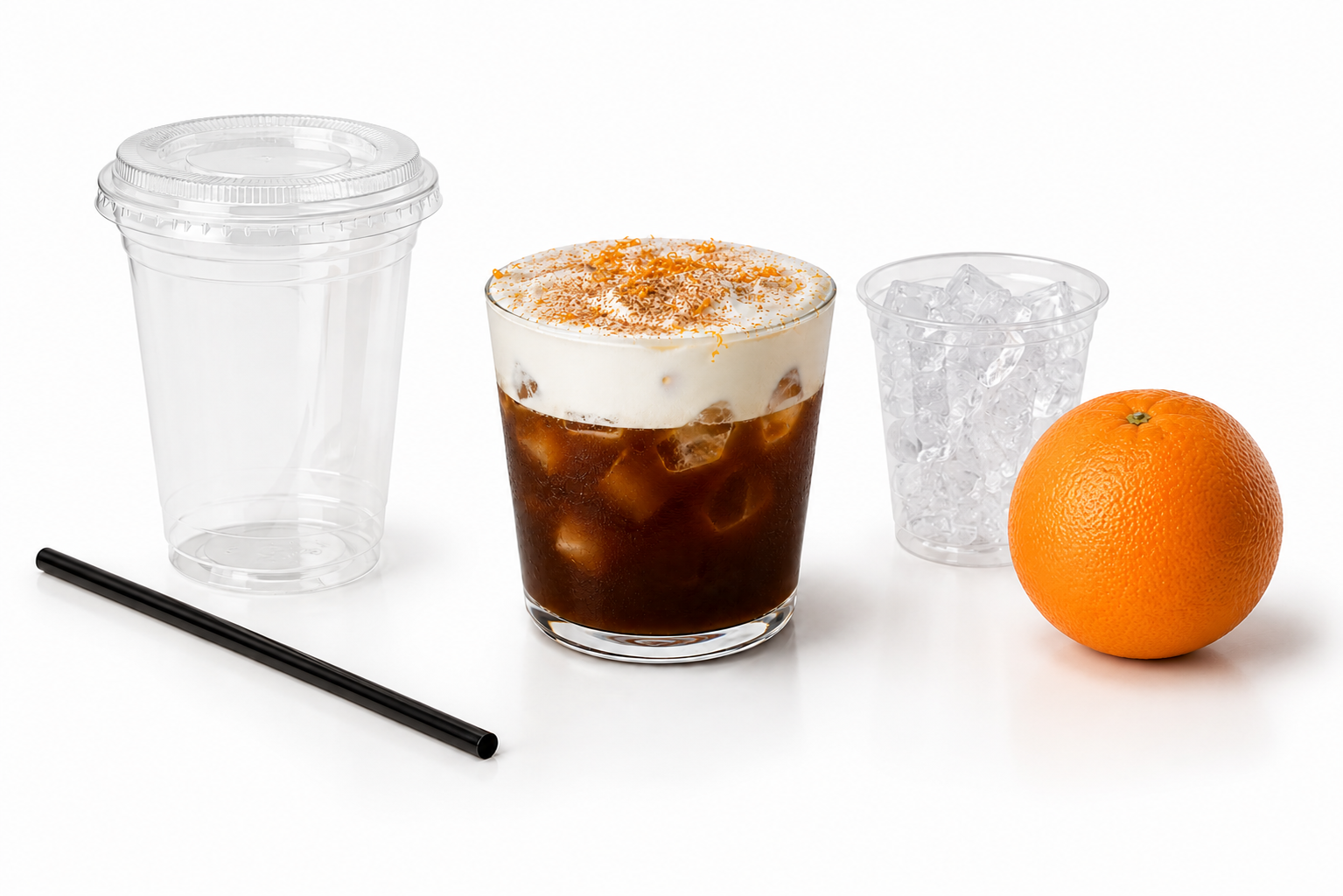
Take the Mont Blanc coffee. Its orange juice works out around eleven pence a serve, the strong coffee about twenty-four, the whipping cream about twenty, the maple syrup ten, and the orange zest garnish roughly eight. Two lines on that list teach the whole lesson. The first is the vanilla: a single teaspoon of real vanilla extract costs about twenty-five pence, which is more than the coffee in the drink, and you would never guess that without costing it, because tiny amounts of expensive ingredients are exactly the hidden costs your instinct misses. The second is the packaging: the cup, lid and straw add around eighteen pence, close to fifteen percent of the total, and they never touch the flavour, so they are the first thing people forget and the fastest way to make every costing wrong. Add it all up and this drink costs about £1.16 to make.
That points at the rule that matters most: cost every single ingredient, not just the obvious ones. Packaging, garnish, the "free" stuff like ice and water and foam, and the waste you can't avoid because an orange never gives you a hundred percent juice. If it goes into or around the drink, it gets a line, no exceptions. And cost it to the penny, because a ten-pence error on one drink is nothing, but the same error across a hundred and fifty drinks a day is over five thousand pounds a year on a single menu item. Careless costing lets you run a "successful" viral drink at a loss without ever realising.
Doing this by hand once is worth it, so you understand where every number comes from. Doing it by hand forever is a waste of your time, which is the entire reason Silvan exists: you enter each ingredient and its pack price once, and the app runs pack-to-portion for every drink automatically, to the penny, packaging included. Next lesson, we take this cost per serve and turn it into a price and a margin.
What to remember
Test what you've learned
1. Why can't you read a drink's cost straight off the pack price?
2. What are the four steps of "pack to portion"?
3. In the worked example, what's the surprise about the vanilla extract?
4. Which of these must be costed as a line?
5. Why does costing "to the penny" matter?
Optional reflection
Cost one drink from your own menu using the four steps. Include every invisible line. Was the total higher or lower than you expected, and which ingredient surprised you?