
You don't need to guess what's next
Flavour trends leave signals before they peak, and they come from a small number of predictable places. Learn to read the signal and you can put a rising flavour on your menu while it's still climbing, instead of adding it once it's everywhere and already cooling.
Where flavour signals come from
Nearly every trending drink flavour traces back to one of four sources.
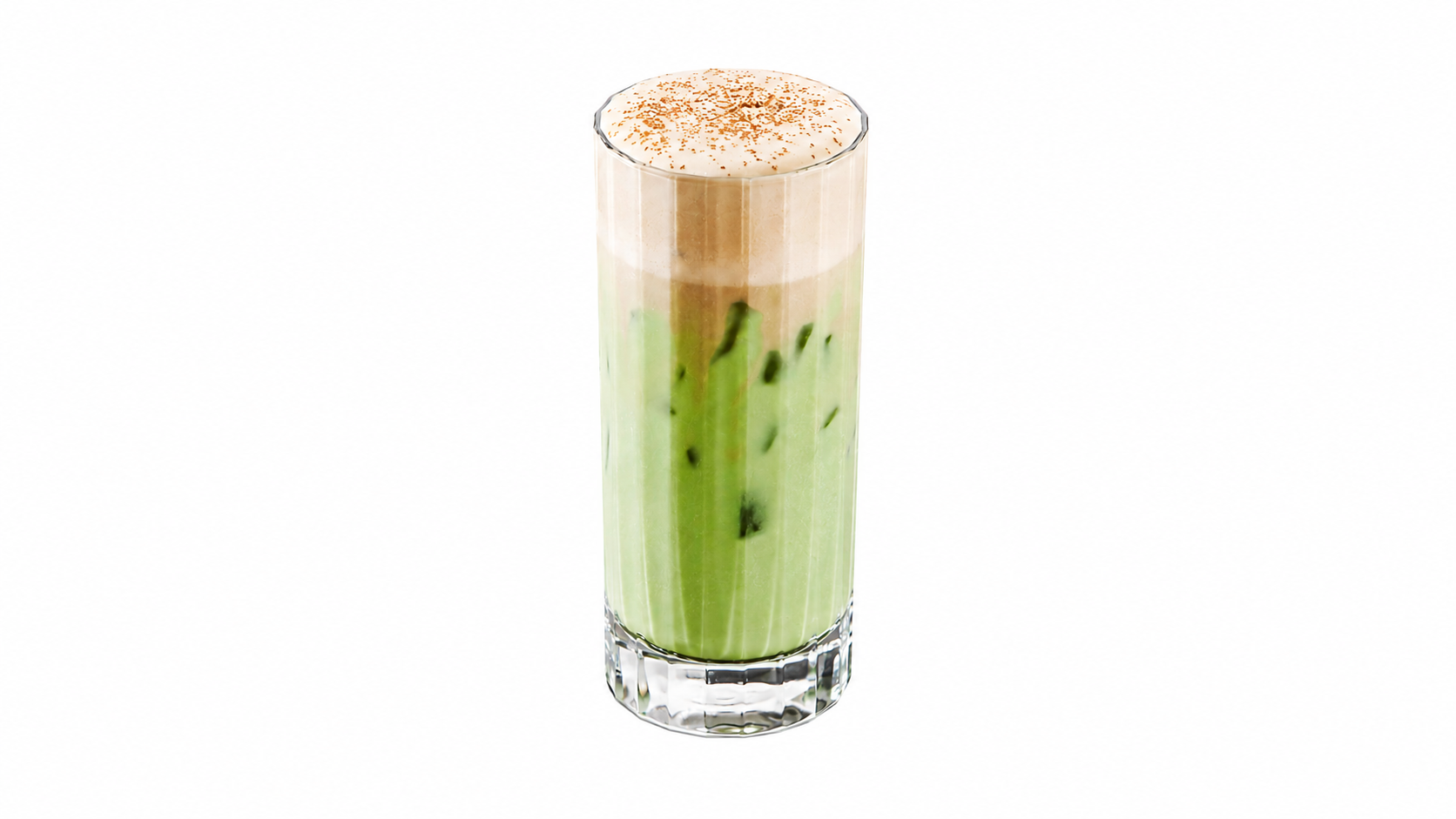
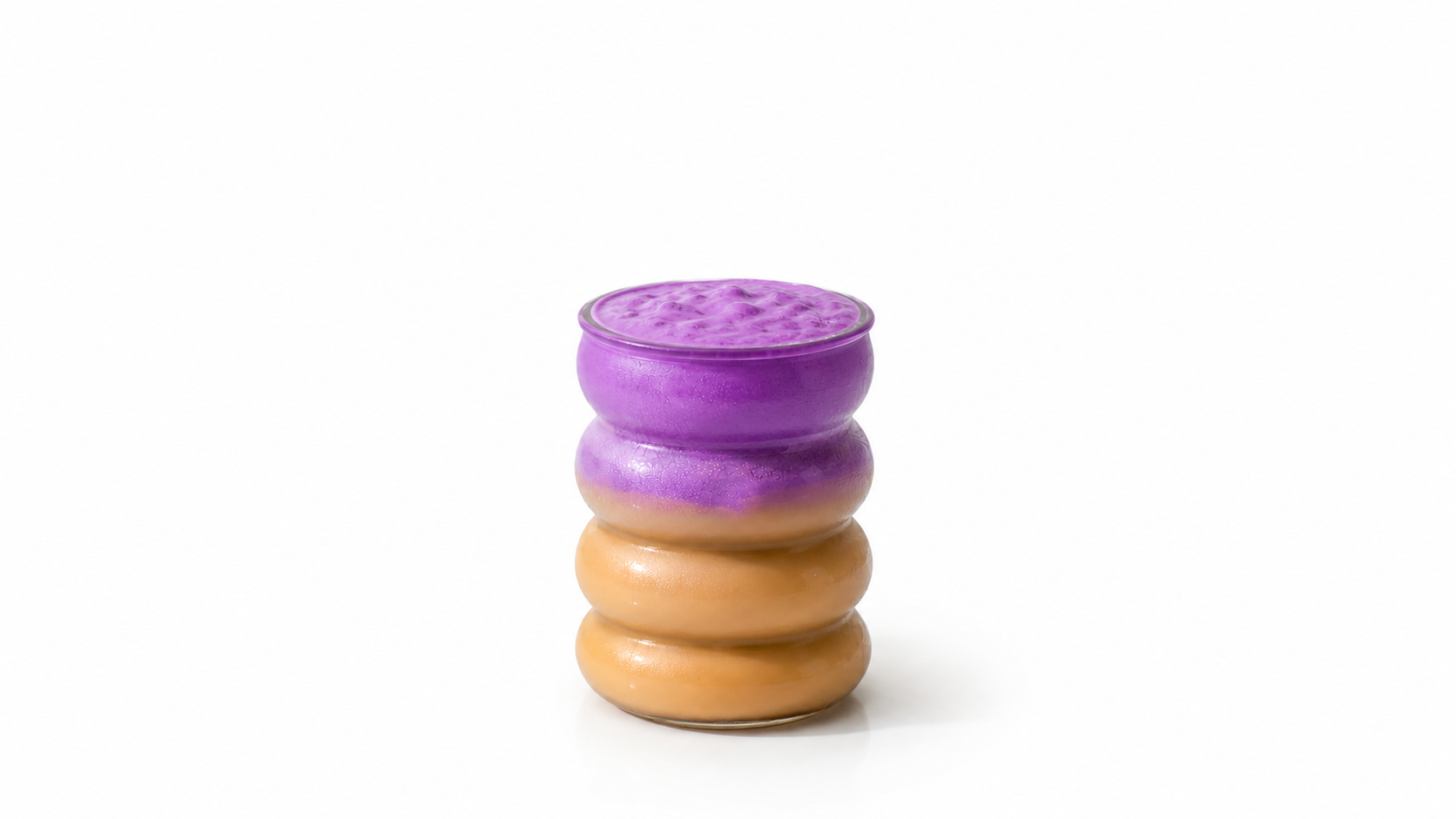
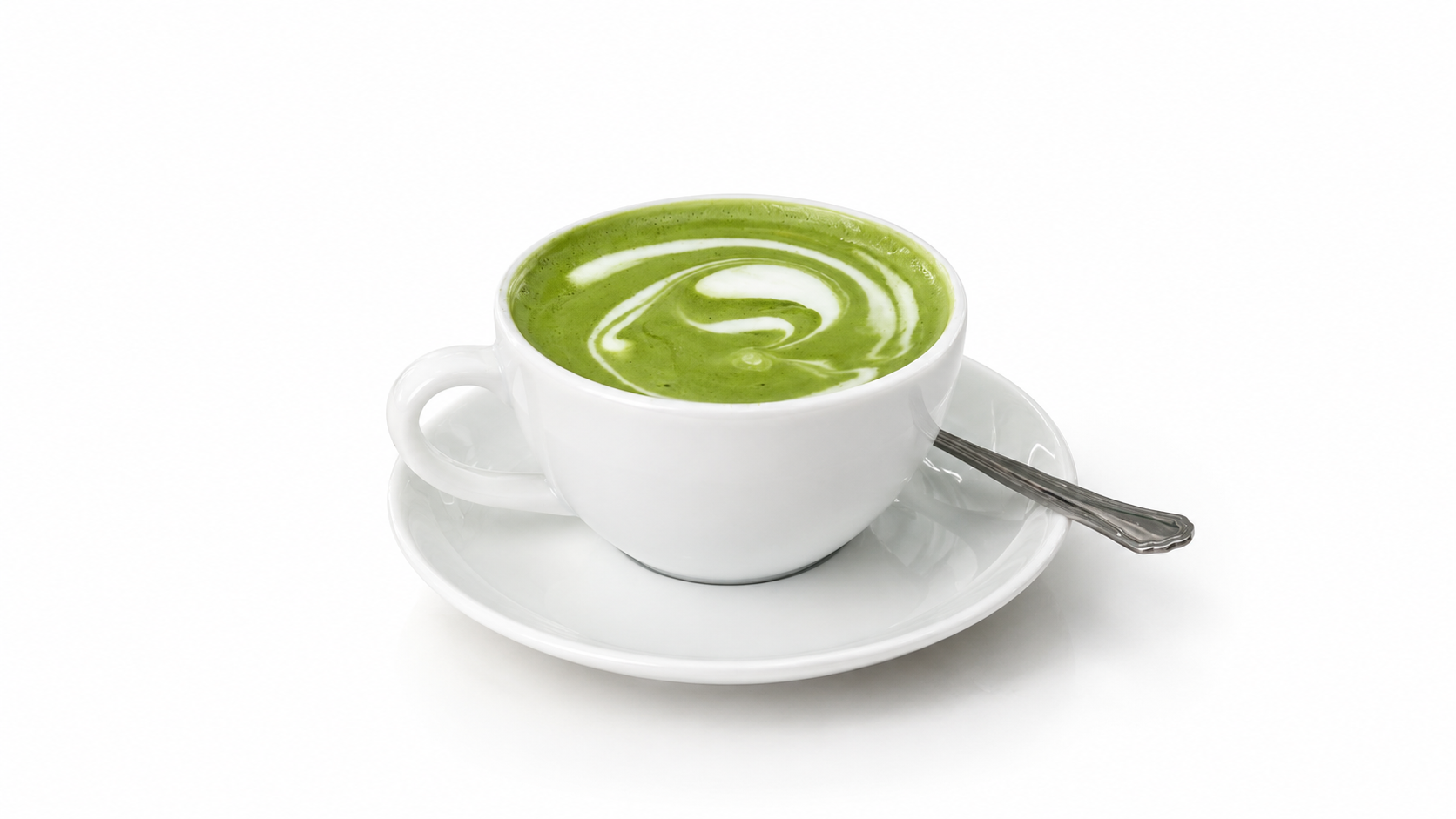
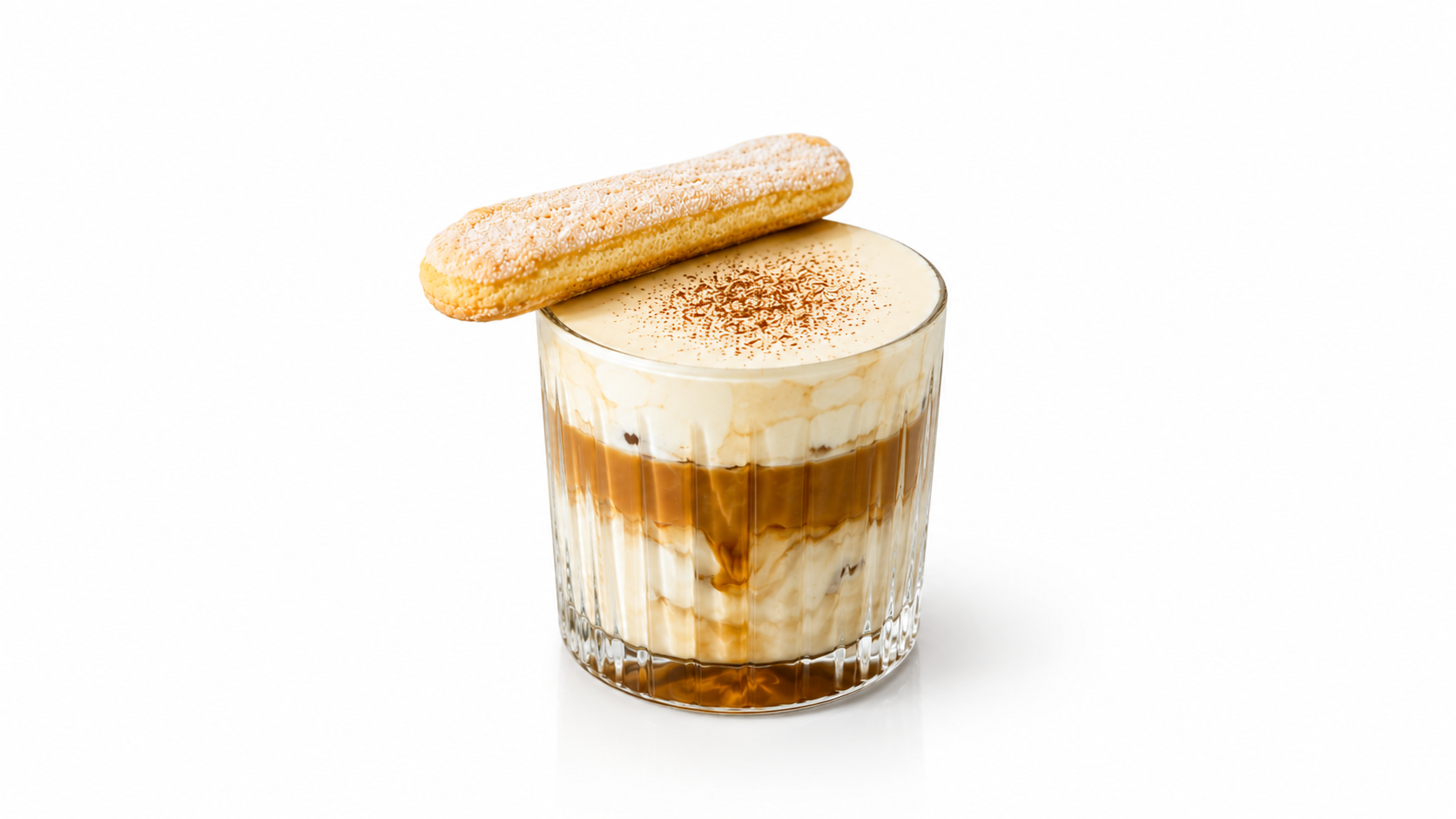
almost every trending flavour comes from one of these four places
Dessert and candy crossovers
A viral sweet becomes a drink. Dubai chocolate drove pistachio into every espresso bar; tiramisu, crème brûlée and Biscoff all crossed the same way.
Asian ingredient migration
Flavours move from specialty to mainstream in a fairly reliable order: matcha led, then ube, then pandan and hojicha, with yuzu, taro and miso behind them. Watching this line tells you what's next.
Wellness and function
Flavours that carry a health story travel: matcha (calm energy), hojicha (low caffeine), warming spices like cardamom and ginger ("functional heat"), adaptogens and botanicals.
Nostalgia with a modern twist
A familiar flavour returned in a more grown-up form. Not new, reassuring, which is exactly why it sells.
Reading the curve
Every flavour moves through the same stages. Where it sits decides whether you should jump on it.
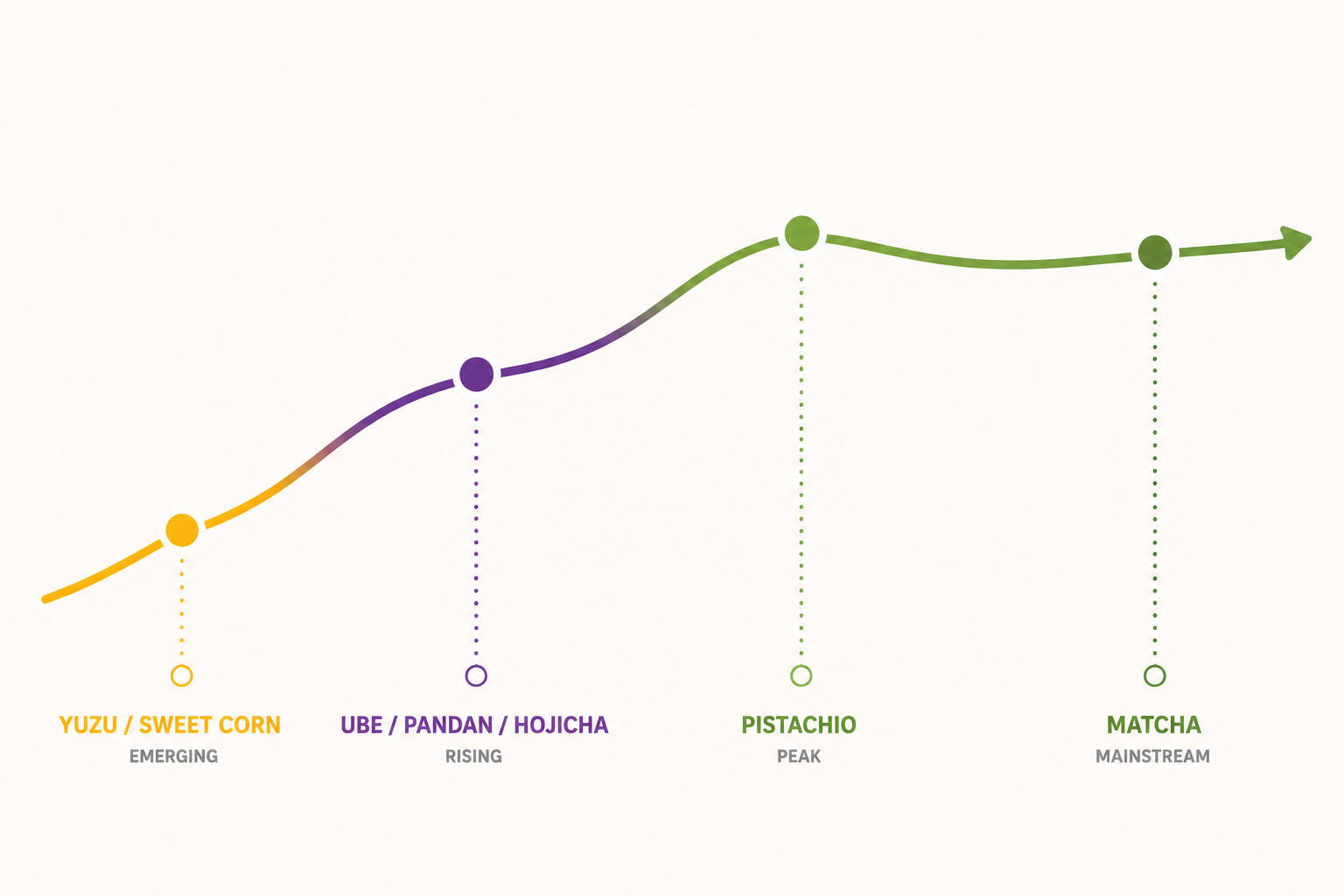
add a flavour while it's rising, not at peak — peak means you're one of many
The move: add flavours while they're rising, not at peak. By peak the attention is split across everyone doing it.
July 2026
for an independent chasing a viral serve, the rising tier is where to play
july 2026's sweet spot: ube, pandan, hojicha — proven, but not yet on every menu
pistachio still sells, but it won't make you stand out — rising flavours will
Catching a flavour while it climbs
Most cafes add a flavour once they've seen it everywhere. By then it's too late to own it. The skill isn't spotting what's hot, it's spotting what's rising, and that's readable if you know where to look.
Start with where flavour signals come from. Nearly every trending drink flavour traces to one of four sources. The first is dessert and candy crossovers: a viral sweet becomes a drink. Dubai chocolate is the clearest recent case, it pushed pistachio into practically every espresso bar in a year. The second is Asian ingredient migration, where flavours move from specialty to mainstream in a fairly reliable order. Matcha led, then ube, and now pandan and hojicha are following the same path, with yuzu and taro behind them. Watching that line is close to a cheat sheet for what's next. The third is wellness and function: flavours that carry a health story travel further, which is why matcha, low-caffeine hojicha, and warming spices like cardamom and ginger keep spreading. The fourth is nostalgia with a modern twist, a familiar flavour brought back in a more grown-up form. If a new flavour doesn't fit one of these four, treat it with suspicion, it's probably a novelty that won't last, like spring onion coffee.
Then read the curve. Every flavour moves through the same stages: emerging, rising, peak, mainstream, then fading. Emerging is early and risky but being first is its own story. Rising is the sweet spot, there's enough proof it works, but it's still early enough that you can own it locally before the chains arrive. Peak is when everyone has it, safe but crowded. Mainstream is when it stops being a trend and becomes a permanent fixture, which is where matcha has landed. Fading speaks for itself. The move is simple: add flavours while they're rising, not at peak, because at peak the attention is split across everyone doing the same thing.
Here's where things sit as of mid-2026. Matcha is mainstream now, a staple rather than a differentiator. Pistachio is at peak, still selling hard off the back of Dubai chocolate but on every menu including the chains, so it won't make you stand out. The rising tier, where the opportunity is, is ube, pandan, hojicha and warming spice. Ube is already reaching chain menus, pandan is spreading fast (often paired with coconut), and hojicha is being called the flavour of the year for its low-caffeine, sweet-smoky profile. Further back, keep an eye on yuzu, sweet corn, black currant and sweet-and-spicy crossovers, these are the emerging signals that could be next year's rising tier.
So if you're building a viral serve right now, reach for the rising tier. A pistachio drink will sell, but it's a crowded bet. An ube, pandan or hojicha serve gives you the same proven appeal with far less competition, which is exactly what "the Twist" from Lesson 1 needs.
Next lesson, we take one of these and turn it into an actual drink.
What to remember
Test what you've learned
1. According to the lesson, when should you add a trending flavour to your menu?
2. What are the four sources most trending flavours come from?
3. Which flavour is described as mainstream — a staple rather than a current trend?
4. Why is pistachio called a "crowded bet" in mid-2026?
Optional reflection
Name one rising flavour from this lesson and one drink on your menu you could pair it with. Where does that flavour sit on the curve?